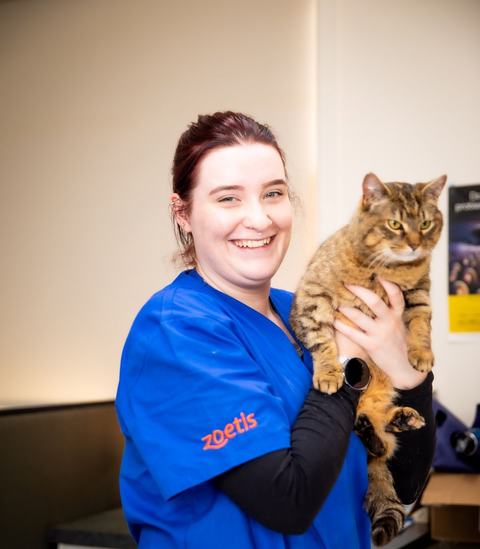
New Zealand Certificate in Animal Healthcare Assisting (Level 4) (Rural Animal Healthcare)

The New Zealand Certificate in Animal Healthcare Assisting (Level 4) (Rural Animal Healthcare) is a comprehensive, one-year programme designed for those passionate about animal care and health. Perfect for individuals who enjoy working outdoors and are dedicated to animal well-being, this certificate provides the skills needed to assist veterinarians in large animal or mixed practice clinics.

Graduates leave with a diverse skill set, ready to effectively support veterinary clinics or work as rural animal technicians under a veterinarian's supervision. This certificate lays a strong foundation for a rewarding career in animal healthcare, combining practical experience with extensive knowledge to address the varied needs of rural animal care.

Campus
Telford
Qualification
Certificate
Level
4
Credits
120
Duration

One year full-time

Dates
TBC
Tuition Fees

Zero tuition fees

Direct Material Costs

$2,545.00 (incl. GST)

International Fees

Check if this course is available to international students in our International section.

Course Outline

This qualification is designed for individuals eager to enter the animal healthcare sector, equipping them with skills to provide care for animal patients. By enrolling in this programme, you'll gain the expertise needed to work alongside clients, veterinarians, and multidisciplinary animal healthcare teams, ensuring the highest standards of care in rural environments. 

Specialised Skills for Rural Animal Healthcare Graduates: 

Graduates of the Rural Animal Healthcare strand will be able to: 

  • Apply an understanding of animal behaviour and welfare principles to handle and restrain rural animal patients with minimal stress. 
  • Utilise hygiene and infection control techniques to prepare, maintain, and clean rural animal healthcare environments. 
  • Use your knowledge of animal health to monitor the well-being of rural animal patients and provide necessary supportive care. 
  • Support veterinarians during common clinical procedures for rural animal patients (like teatsealing, debudding, metrichecking and surgical support procedures), ensuring the highest level of care. 
  • Use an understanding of basic anatomy and physiology to perform clinical tasks and provide effective care for rural animal patients. 
  • Be prepared to apply basic first aid and emergency procedures for rural animal patients in real or simulated emergency situations.
Course Content

Semester 2

ANML4305 Rural Animal Health and Hygiene

The aim of this course is to develop the knowledge, skills, and competencies to assist in the provision of rural animal healthcare.

ANML4306 Rural Animal Clinical Assistance

The aim of this course is to develop the knowledge, skills, and competencies to provide clinical assistance in all aspects of the animal healthcare environment.

ANML4307 Rural Animal Preparation for Practice

The aim of this course is to develop the knowledge, skills, and competencies required for effective a clinical practice and first aid.

ANML4308 Rural Animal Practicum 2

Practicum will take place in a suitable animal healthcare environment that enables a balance of application of theoretical knowledge and practical skills acquisition required for the strand. The total requirement of 240 hours of practicum during this programme (inclusive of 80hrs in a veterinary clinic) will be distributed among strand specific practicum courses.

Ākonga will be advised of each practicum course requirements prior to the start of the course.

Semester 1

ANML4301 Rural Animal Professionalism and Infection Control

The aim of this course is to develop the knowledge, skills, and competencies to work in a professional, safe, and effective manner in a rural animal and animal healthcare environment.

ANML4302 Rural Animal Anatomy and Physiology

The aim of this course is to develop the knowledge, skills, and competencies relevant to basic anatomy and physiology to support rural animal patient care.

ANML4303 Rural Animal Husbandry and Behaviour

The aim of this course is to develop the knowledge, skills, and competencies to provide safe and appropriate husbandry and handling to support rural animal health and welfare.

ANML4304 Rural Animal Practicum 1

Practicum will take place in a suitable animal healthcare environment that enables a balance of application of theoretical knowledge and practical skills acquisition required for the strand. The total requirement of 240 hours of practicum during this programme (inclusive of 80hrs in a veterinary clinic) will be distributed among strand specific practicum courses.

Ākonga will be advised of each practicum course requirements prior to the start of the course.

Career Opportunities

Career and Study Outcomes 

As a Rural Animal Healthcare Assistant graduate, you will play a vital role in the daily operations of rural veterinary practices. Your responsibilities will include assisting with medical procedures, administering medications, handling and restraining animals, conducting routine health checks, and ensuring clean and hygienic environments to prevent disease. You will also monitor animal behaviour, provide supportive care during recovery, and assist in emergency care situations. 

You will work directly alongside veterinarians, veterinary technicians, and other animal healthcare professionals to provide comprehensive care for rural animals in rural environments. 

Upon completing this program, You will have the opportunity to pursue full-time employment in the animal healthcare field or further your education with the two-year New Zealand Diploma in Rural Animal Veterinary Technology (Level 6).

Application Criteria

Entry Requirements

Applicants must have one of the following:

  • 40 credits at NCEA Level 1, including 10 literacy credits and 10 numeracy credits; or
  • a relevant qualification at NZQF Level 2 or above; or
  • a recognised equivalent.
Qualification Pathways

Upon completing this program, you will be well-positioned to enter the animal healthcare field full-time or continue your education. You can advance to the two-year New Zealand Diploma in Rural Animal Veterinary Technology (Level 6). You could also explore opportunities to enroll in the Massey Diploma in Agriculture (Level 5) offered at Telford.

Additional Information

Programme Structure: 

This one-year programme is divided into two semesters, offering a comprehensive educational experience that combines on-campus instruction with workplace and clinical placements. This approach ensures a thorough blend of theoretical knowledge and practical skills. 

Learning Delivery: 

  • On-Campus Classes: Benefit from targeted on-campus instruction designed to enhance your understanding of animal health and care. 
  • Theory and Practice: Engage in a robust curriculum that combines classroom learning with hands-on experience. Participate in activities at Telford Campus and on Telford farms, ensuring you gain practical skills in real-world settings. 
  • Work Placements: Complete 240 hours of approved work placements over the year, including a minimum of 80 hours in a veterinary clinic. This experience provides valuable exposure to various aspects of animal healthcare.
Are you a domestic or international student?

By submitting this form, I agree to the Privacy Notice and consent to receiving email communications from Southern Institute of Technology and its business divisions about learning options, services, news and events.