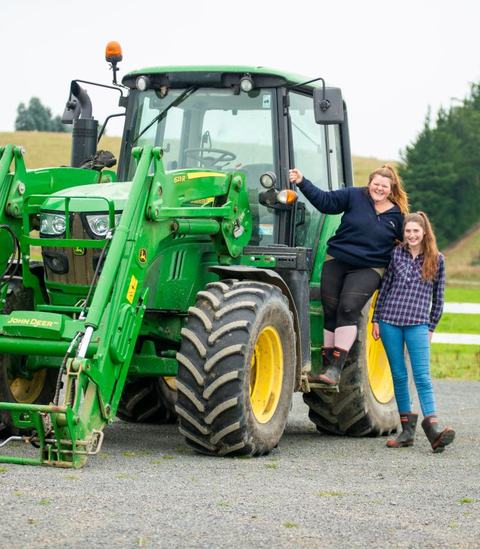
New Zealand Certificate in Horticulture (General) (Level 3)

Build the skills behind healthy plants and productive growing systems. Gain an understanding of plant growth, nutrient and water cycles, and sustainable horticulture practices while exploring specialist areas such as landscape design, vegetable production, or nursery operations.

Campus
SIT Online
Qualification
Certificate
Level
3
Credits
60
Duration

17 Weeks full-time

Up to two years part-time

Intakes are 17 weeks long

Dates
TBC
Fees
This programme qualifies for SIT Zero Fees. Terms and Conditions apply. Click here for more information.
Tuition Fees

Zero tuition fees

Direct Material Costs

$8.00 per credit (incl. GST)

International Fees

$100 per credit (incl. GST). See International.

Course Outline

Get into horticulture with the New Zealand Certificate in Horticulture (Level 3) General. Learn more about growing systems and environments to enhance your hobby or career in the horticulture sector.

You will learn:

  • Nutrient and water cycles
  • Plant establishment and growth
  • Landscape design
  • Outdoor vegetables
  • Nursery production
Course Content

Compulsory

If studying part-time, we recommend you begin with the core compulsory papers, CGH300 and CGH304, as these will provide foundational knowledge for your electives.


CGH300 Introduction to Nutrient and Water Cycles

Level: 3
Credits: 5

This paper introduces students to the concepts of nutrient and water cycles and provides students with knowledge that can be applied to the growing of plants in a variety of conditions.

On successful completion of this paper, students will be able to:

  • Describe and illustrate at least three different nutrient cycles.
  • Describe and illustrate a water cycle.
  • Explain the importance of nutrient and water cycles to plant growth.


CGH304 Introduction to Plant Establishment and Growth

Level: 3
Credits: 25

This paper provides students with a practical background to plant establishment and growth, including the knowledge and skills necessary to select appropriate plants, develop growing media and controlling pest plants.

On successful completion of this paper, students will be able to:

  • Describe plant propagation concepts.
  • Compare different weed control techniques and systems.
  • Develop plant growing media to meet specific needs.
  • Describe at least two different growing systems.
  • Explain the usage of controlled plant growing environments.


Electives

Select 30 credits from the following:


CGH301 Introduction to Landscape Design

Level: 3
Credits: 15

This paper provides students with a practical background to landscape design, including the knowledge and skills necessary to select appropriate plants, develop growing media and controlling pest plants.

On successful completion of this paper, students will be able to:

  • Identify and select plants appropriate for a landscape design.
  • Describe techniques for controlling weeds, plant pests and diseases.
  • Describe the systems for the control of weeds or plant pests.
  • Evaluate the effectiveness of the techniques and systems for the control of weeds or plant pests.


CGH302 Introduction to Outdoor Vegetables

Level: 3
Credits: 15

This paper provides students with a practical background to growing outdoor vegetables, including the knowledge and skills necessary to select appropriate plants, develop growing media and controlling pest plants.

On successful completion of this paper, students will be able to:

  • Identify and select plants appropriate for a specific area and outcome.
  • Describe techniques for controlling weeds, plant pests and diseases.
  • Describe the systems for the control of weeds or plant pests.
  • Evaluate the effectiveness of the techniques and systems for the control of weeds or plant pests.


CGH303 Introduction to Nursery Production

Level: 3
Credits: 15

This paper provides students with a practical background to growing plants in a nursery situation, including the knowledge and skills necessary to select appropriate plants, develop growing media and controlling pest plants.

On successful completion of this paper, students will be able to:

  • Identify and select plants appropriate for a specific nursery production.
  • Describe techniques for controlling weeds, plant pests and diseases.
  • Describe the systems for the control of weeds or plant pests.
  • Evaluate the effectiveness of the techniques and systems for the control of weeds or plant pests.
Career Opportunities

Graduates of the New Zealand Certificate in Horticulture (Level 3) (General) will be able to apply knowledge of plant and soil science, and growing systems and environments to the identification, selection, establishment and growing of plants.

Many graduates of the New Zealand Certificate in Horticulture (Level 3) (General) go on to further study, however some graduates have chosen to use the course to extend their skills for personal use.

Application Criteria

School Leavers
Applicants should be a minimum of 16 years of age, and have attained NCEA Level 2 as follows:

  • 60 credits at Level 2 or above, plus 20 credits from any level, and
  • Literacy - minimum of 10 credits at Level 1 or above through either:
    • specified assessment standards available through a range of subjects and English for academic purposes unit standards 22750 and 22751 (minimum total of 10 credits);
    • or unit standards - package of three literacy unit standards (26622, 26624, 26625 - all three required
  • Numeracy – a minimum of 10 credits at Level 1 or above through either specified assessment standards available through a range of subject (minimum total of 10 credits), or unit standards – package of three numeracy unit standards (26623, 26626, 26627 – all three required)

Mature Applicants
Applicants over the age of 20 years at the time of enrolment will be considered where they can demonstrate the ability to succeed in a programme. Examples of demonstration of ability to succeed are the provision of evidence of successful completion of a programme of study at Level 2 or above and/or employment in the related sector for one or more years. They may be admitted subject to programme regulations approved by the Head of Faculty in consultation with the Programme Manager as appropriate. Personal commitment and a belief in one's own ability to succeed are important personal traits and will always be taken into consideration during the selection process.

English Language Requirements

Applicants whose first language is not English, or who come from a country where the language of instruction in schools is not English, are required to provide evidence of having achieved one of the following

NCEA Level 3 with University Entrance; or

An International Baccalaureate Diploma or Cambridge A- level qualification for which the teaching and assessment was conducted in English; or

Cambridge Certificate in Teaching English to Speakers of Other Languages (CELTA), or Trinity College London Certificate in Teaching English to Speakers of Other Languages (CertTESOL); or

Successful completion of all primary education (being the equivalent of New Zealand primary school years 1 to 8) and at least three years of secondary education (being the equivalent of three years from New Zealand secondary school years 9 to 13) at schools in either New Zealand, Australia, Canada, the Republic of Ireland, South Africa, the United Kingdom and the United States, or one of the countries listed in Rule 18.5 where the student was taught using English as the language of instruction; or

Successful completion of at least five years of secondary education (being the equivalent of New Zealand secondary school years 9 to 13) at schools in either New Zealand, Australia, Canada, the Republic of Ireland, South Africa, the United Kingdom and the United States where the student was taught using English as the language of instruction; or

Successful completion of a Bachelor's Degree, Graduate Certificate, Graduate Diploma, Bachelor Honours degree, Postgraduate Certificate, Postgraduate Diploma, Masters' Degree or Doctoral Degree, the language of instruction of which must be in English and which must be from a tertiary education provider from New Zealand, Australia, Canada, the Republic of Ireland, South Africa, the United Kingdom or the United States; or

Successful completion of one of the following internationally recognised proficiency tests listed below to the level required of the programme of study and with all scores achieved in a single test during the two years preceding the proposed date of enrolment


IELTS test - General or Academic score of 5 with no band score lower than 5 
TOEFL Paper based test (pBT) - Score of 500 (with an essay score of 4 TWE) 
TOEFL Internet based test (iBT) - Score of 35 (with a writing score of 14) 
Cambridge English Examination - B2 First or B2 First for schools with a score of 154. No less than 154 in each skill. 
OET - Minimum of Grade C or 200 in all sub-tests 
NZCEL - Level 4 (Academic) 
Pearson Test of English (Academic) - PTE (Academic) score of 36 with no band score lower than 36 
Language Cert - B1 Achiever IESOL (LRWS) with PASS and no less than PASS in each skill 
Trinity ISE - ISE I with no less than distinction in any band

Are you a domestic or international student?

By submitting this form, I agree to the Privacy Notice and consent to receiving email communications from Southern Institute of Technology and its business divisions about learning options, services, news and events.